A five-page website is often a sensible starting point for a service business. It gives customers a place to understand what you do, see evidence of your work and contact you. The useful question is not how much content you can fit into five pages. It is what a visitor needs to know before taking the next step.
Start with one clear outcome
Decide what a successful visit looks like. For a tradesperson, it might be an enquiry with a location and job description. For a consultant, it might be a call booking. Choose a main action and make it easy to find throughout the site. A page that asks visitors to do six equally important things can leave them unsure where to begin.
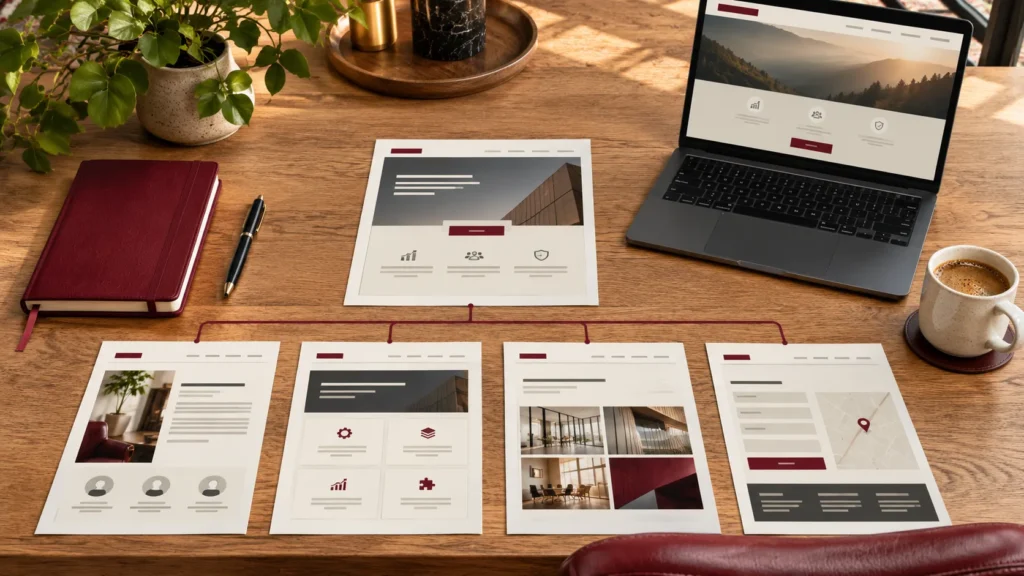
Give each page a job
- Home: explain who you help, what you offer and where to go next.
- About: introduce the people behind the business and the experience relevant to your customers.
- Services: describe what is included, who each service suits and how an enquiry works.
- Our work or frequently asked questions: show real examples or answer the questions that regularly delay a decision.
- Contact: provide a short form, reliable contact details, operating hours and service areas.
This is a starting structure, not a fixed rule. A business with several distinct services may need individual service pages later. A new company without a portfolio can use its fourth page to explain its process rather than filling it with stock testimonials.
Prepare the content before the build
Gather a usable logo, accurate contact details, service descriptions and photographs you have permission to use. Write down the questions customers ask on the phone. Those questions often produce better website copy than a list of impressive-sounding claims. If you use testimonials, ask for permission and keep the wording faithful to what the customer actually said.
Think about the mobile visit
Picture someone opening the site while comparing businesses on their phone. Can they understand the offer quickly? Can they read the text without zooming? Are the phone number and enquiry button easy to tap? Keep forms focused on the information you need to respond, with room for a useful message.
Agree on the handover
Before launch, confirm who will update the content, receive enquiries and look after the website. Check each form with a real test submission, follow the important links and review the contact details again. A clear five-page site gives you a foundation you can expand when the business needs more.